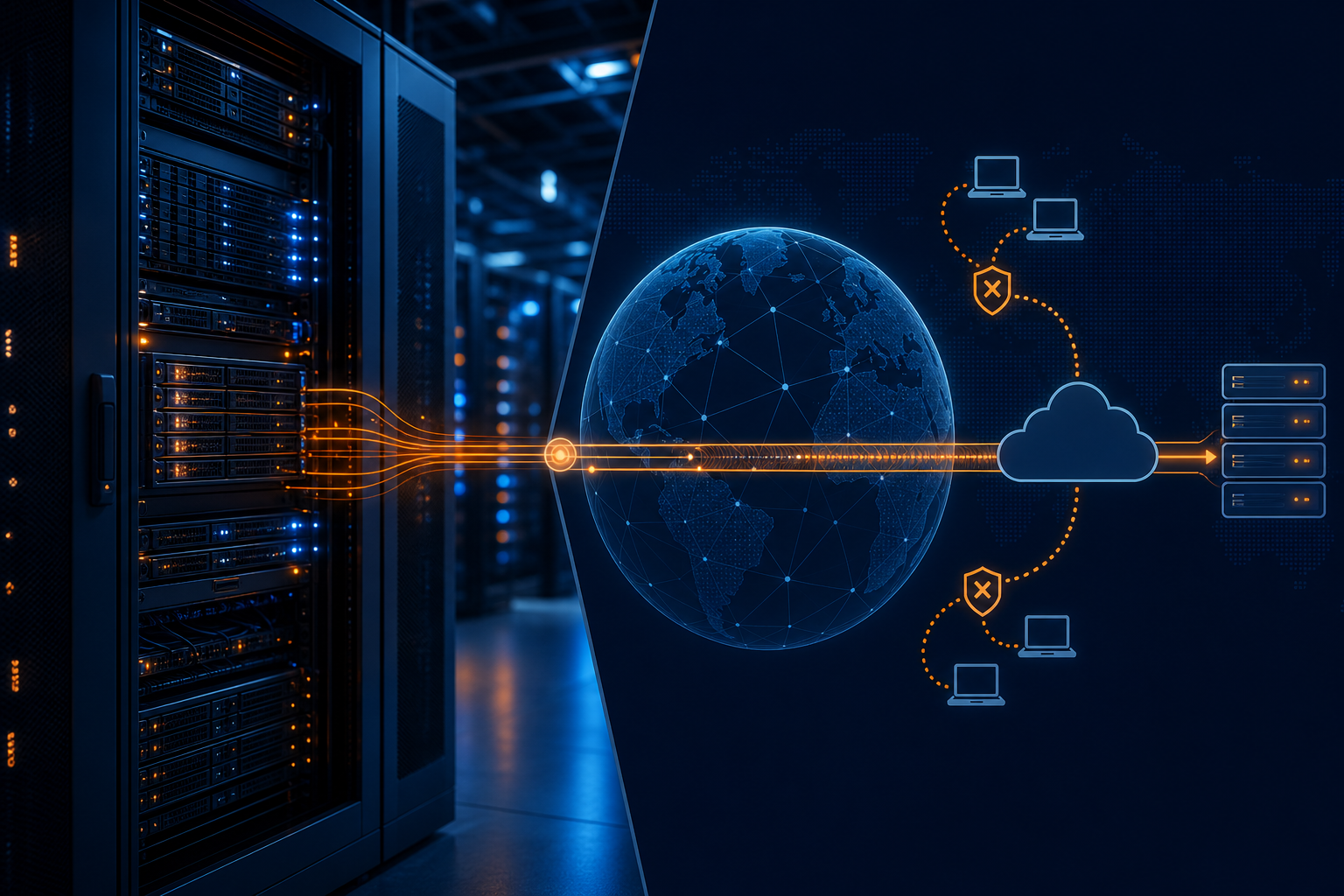
Stateful firewalls have always promised a simple idea: if traffic belongs to a real connection, allow it; if it does not, discard it. The difficulty is not the idea. The difficulty is executing that decision when the network is under attack, packet volume is climbing aggressively, and every unnecessary layer of processing becomes part of the failure.
CoreEdge FlowTrack is CoreTech’s answer to that pressure. It brings connection awareness closer to the packet path, where traffic can be assessed before hostile flows become expensive to the protected infrastructure. Instead of treating every inbound packet as equally deserving of deeper inspection, FlowTrack applies a simple security principle: legitimate traffic should have a defensible relationship to real network activity.
When that relationship is absent, CoreEdge can reject the traffic early. The result is less pressure on downstream systems, fewer wasted processing cycles, and a much smaller opportunity for spoofed traffic to distort application availability.
The Legitimacy Principle
Every real network conversation leaves structure behind. A client does not receive a valid response in a vacuum; legitimate flows have context, timing, protocol behavior, and directionality that separate them from synthetic flood traffic. FlowTrack uses that principle as a defensive boundary.
At a high level, CoreEdge observes the shape of allowed communication and uses that state to evaluate whether inbound traffic belongs to a legitimate exchange. This does not require exposing application logic or pushing every decision into userspace. It means the edge can make informed enforcement decisions while traffic is still close to the network layer.
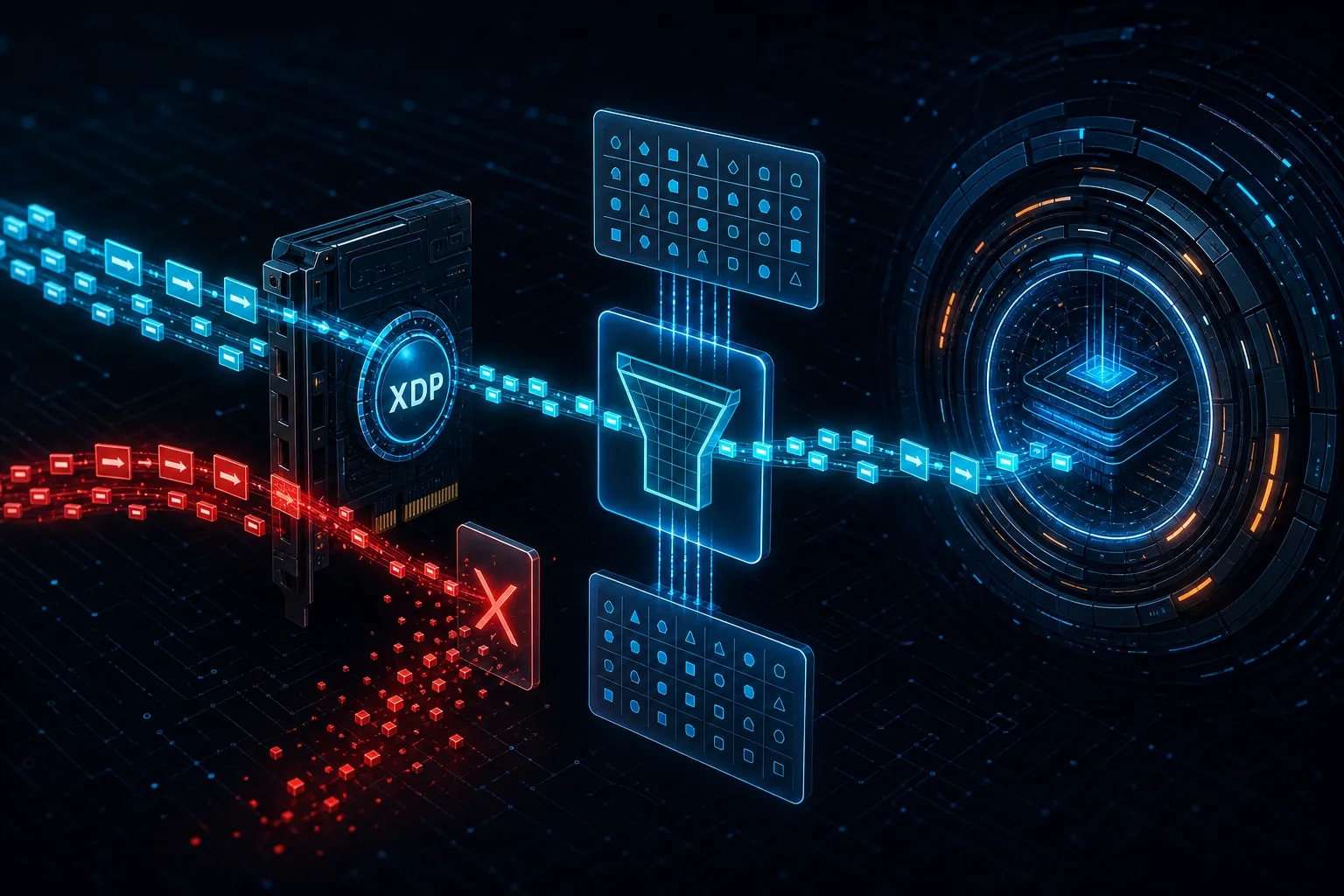
That difference matters during spoofed floods. A hostile packet may look superficially valid when viewed in isolation, but FlowTrack is designed to evaluate whether it fits the surrounding connection context. Traffic that cannot justify its place in the conversation is treated as hostile before it reaches the systems attackers are trying to exhaust.
This is the difference between a firewall that reacts only to volume and a firewall that understands legitimacy. FlowTrack does not rely on packet appearance alone. It evaluates whether traffic behavior belongs to a real exchange.
Why This Matters During Spoofed Floods
ACK floods are designed to exploit stateless inspection. They send enormous volumes of packets that resemble established TCP traffic, hoping the firewall treats them as replies rather than as unsolicited noise. Traditional filters often need deeper stack processing, coarse thresholds, or broad blocks that risk harming legitimate sessions.
FlowTrack reduces that ambiguity. Instead of asking only whether the packet has plausible protocol fields, CoreEdge evaluates whether the packet belongs to a credible stateful exchange. This lets the platform reject large classes of forged traffic without forcing the application layer to absorb the first wave of damage.
Reflection attacks follow the same pattern. Attackers attempt to make unsolicited traffic appear like valid responses from external systems. Weak filtering often sees only the packet. FlowTrack evaluates the surrounding connection reality, allowing CoreEdge to distinguish legitimate response traffic from traffic that was engineered to consume capacity.
This is stateful DDoS mitigation at the correct layer. It does not ask the application to defend itself. It does not wait until hostile traffic has already consumed the most expensive parts of the stack. It makes the legitimacy decision early, while enforcement is still efficient.
Designed For Attack Conditions
Classic connection tracking is powerful, but it was not designed for every packet to be part of an extreme DDoS decision loop. Conventional conntrack paths can introduce memory pressure, lock contention, and higher per-packet overhead precisely when the system has the least room for waste.
FlowTrack is designed around a lighter state model appropriate for high-pressure network environments. It keeps the enforcement path focused on the minimum context required to distinguish credible flows from hostile noise, while avoiding heavyweight operations that become dangerous under sustained attack.
The numbers matter because attack defense is math before it is policy. A DDoS platform must make decisions fast enough that mitigation does not become the bottleneck. CoreEdge is engineered for wire-speed enforcement, low-latency state validation, and predictable behavior when packet rates climb sharply.
FlowTrack also avoids treating every flow as equally expensive forever. Long-lived or high-activity traffic can be managed without repeatedly burdening the data plane with unnecessary work. CoreEdge uses adaptive state handling to keep enforcement accurate while preserving the performance budget needed during an active flood.
State Without Stalling The Network
The state model behind FlowTrack is intentionally compact. TCP, UDP, and ICMP behave differently, so CoreEdge treats them differently. Connection-oriented traffic requires a different legitimacy model than connectionless traffic, and operational control must reflect that distinction without dragging the data plane into heavyweight bookkeeping.
This matters for production networks where asymmetry is common. DDoS mitigation providers, ISPs, and large hosting environments often see traffic paths that are not perfectly symmetric. FlowTrack supports stateless-inspired tracking modes for those realities, allowing CoreEdge to validate hostile inbound traffic even when the network topology is more complex than a single inline firewall.
The goal is not to recreate a traditional firewall table in a different location. The goal is to keep the security invariant that matters most: unsolicited packets should not become expensive. FlowTrack preserves that invariant while keeping enforcement close to the packet path and far away from application-layer damage.
Zero-Downtime Control
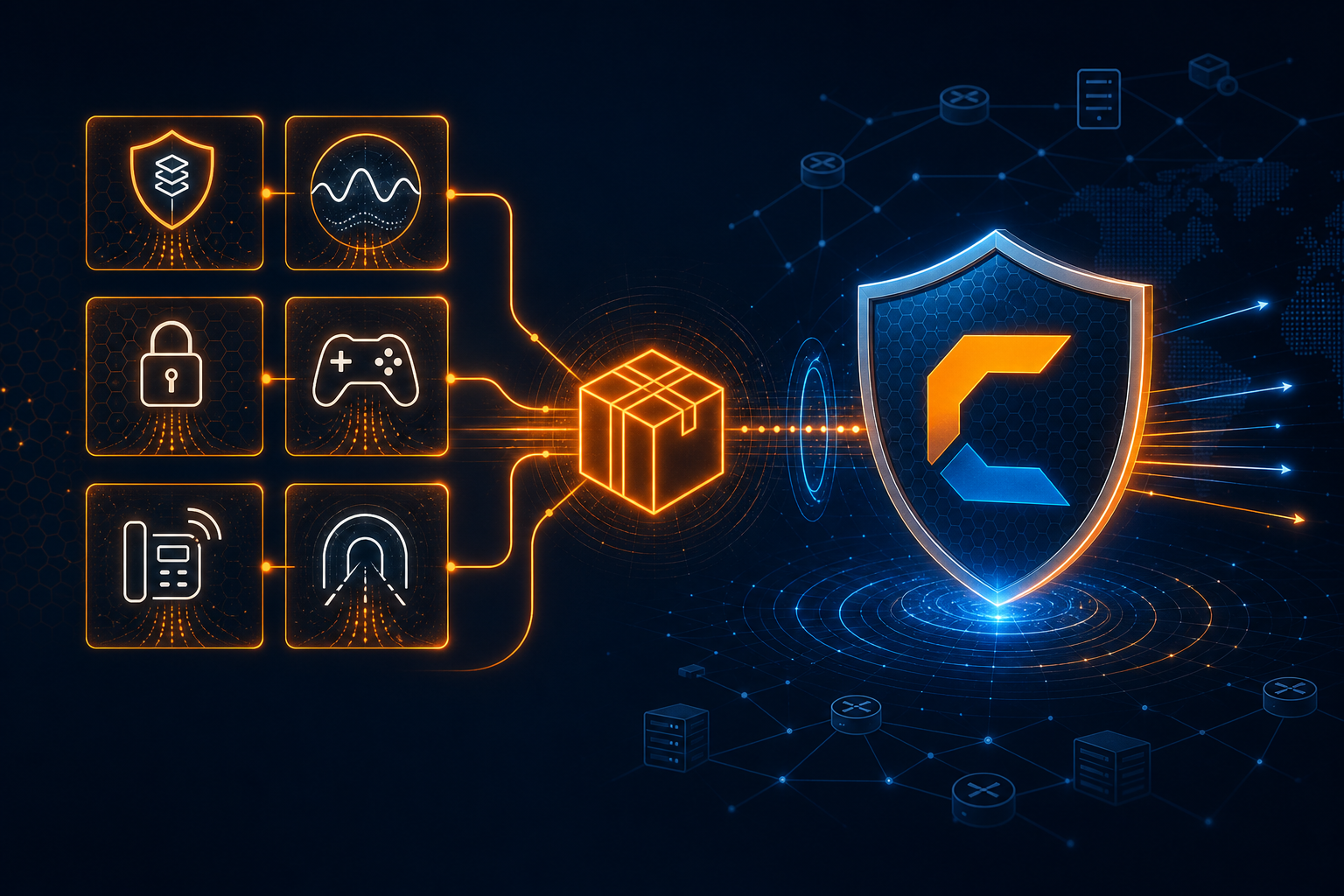
FlowTrack is not an isolated packet filter. It is part of the broader CoreEdge architecture, where operational control, observability, configuration, and enforcement are separated cleanly. The control plane gives operators visibility and policy management. The data plane enforces decisions at the speed required by modern DDoS defense.
That separation gives CoreTech a practical production advantage. Operators can adjust policy, refine rate limits, change protocol behavior, and respond to live attacks without restarting the firewall or flushing active traffic. The mitigation layer remains active while policy evolves.
This is where FlowTrack becomes operationally different from legacy appliances. A traditional firewall often forces operators to choose between safety and continuity: apply the rule and risk disruption, or delay the rule while an attack continues. CoreEdge removes that tradeoff. Policy changes can happen while packets are moving, while sessions remain active, and while the mitigation layer continues protecting the network.
The CoreEdge Difference
DDoS defense is no longer just about how much traffic a platform can receive. It is about how quickly it can decide that traffic is illegitimate, how efficiently it can enforce that decision, and how safely it can adapt while the attack is still changing.
CoreEdge FlowTrack gives CoreTech a stateful enforcement layer where the decision belongs: before spoofed packets reach critical infrastructure and before the application is forced to pay for traffic it never requested. Combined with CoreDetection’s behavioral intelligence, FlowTrack turns packet legitimacy into a real-time defensive primitive.
Legacy firewalls inspect packets after the network has already paid too much. FlowTrack validates legitimacy before hostile traffic earns that privilege.
Want to see this in action?
Get a live demonstration of CoreTech's DDoS mitigation platform.